Roland Farkas Selected for the ERIAC – Villa Romana Artist Residency 2026
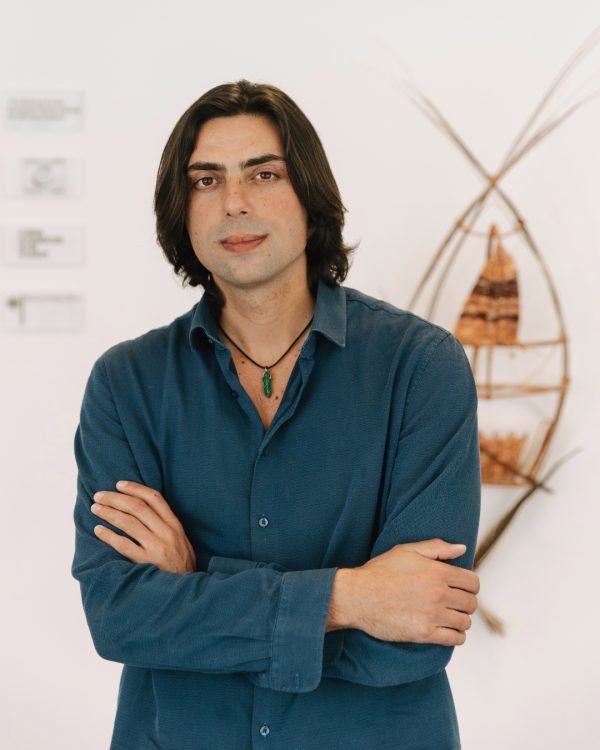
International Guest Artist 2026: Roland Farkas
A cooperation between the European Roma Institute for Arts and Culture, ERIAC, and Villa Romana, Florence.
Villa Romana and ERIAC are pleased to announce Roland Farkas as the recipient of the joint artist residency programme for 2026.
Initiated in 2020, the partnership between ERIAC and Villa Romana represents a shared commitment to supporting the development and international visibility of contemporary artists of Roma heritage. The programme provides artists with time, space and a new cultural context in which to deepen their practice, develop research and establish new artistic connections.
For its 2026 edition, the programme will offer one artist a one-month residency at Villa Romana in Florence.
This year, ERIAC and Villa Romana received 10 eligible applications. The jury convened in a hybrid format on 16 July 2026 and was composed of:
• Elena Agudio, art historian and curator, Director of Villa Romana
• Robert Gabris, artist and former Villa Romana resident
• Anna Mirga-Kruszelnicka, anthropologist, researcher and Executive Director of ERIAC
• Maria Lind, curator, writer, educator and Director of Kin Museum of Contemporary Art in Giron/Kiruna
• Romy Rüegger, artist, writer and researcher, former Villa Romana resident
The jury assessed the applications according to the strength and maturity of the artistic practice, the potential of the residency to meaningfully contribute to the artist’s development at their current stage of career, the commitment to developing artistic methods and techniques, and the capacity for continued artistic growth. Particular consideration was also given to the potential of the proposed practices to connect local and everyday lived experiences of Roma communities with broader social, historical and transnational perspectives.
The jury selected Roland Farkas for the 2026 residency, particularly appreciating the way his proposal engages with Florence as a specific cultural and artistic context. His interest in the city’s rich craft traditions and in discovering materials that can enter into dialogue with his existing work with woven willow offered a compelling direction for the residency. The jury valued his intention to explore how materials can carry stories across past, present and future, while continuing his engagement with Roma identity and the reclaiming and reshaping of Roma narratives through contemporary artistic practice.
The selection also continues an existing dialogue between Farkas and ERIAC. Earlier this year, his work was presented as part of ERIAC’s Spring Salon, Yesterday is Tomorrow, and the residency offers an opportunity for this artistic exchange to develop further in a new context.
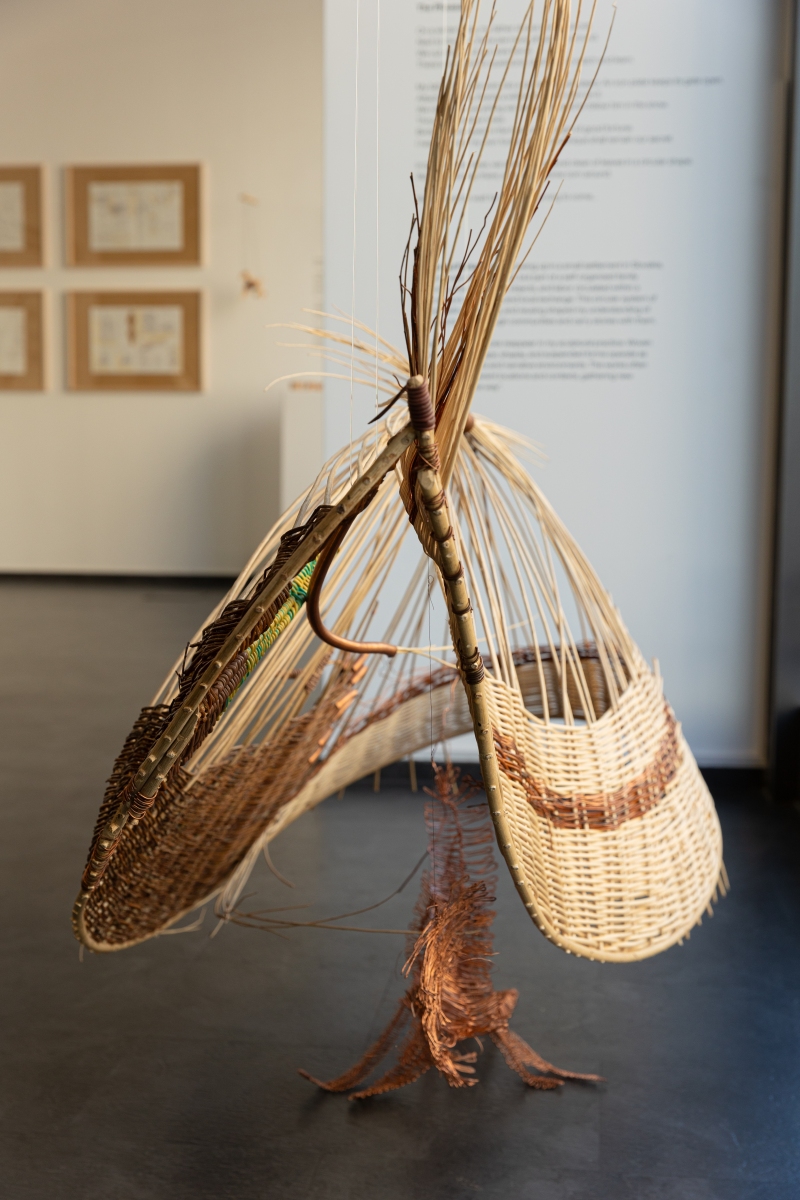
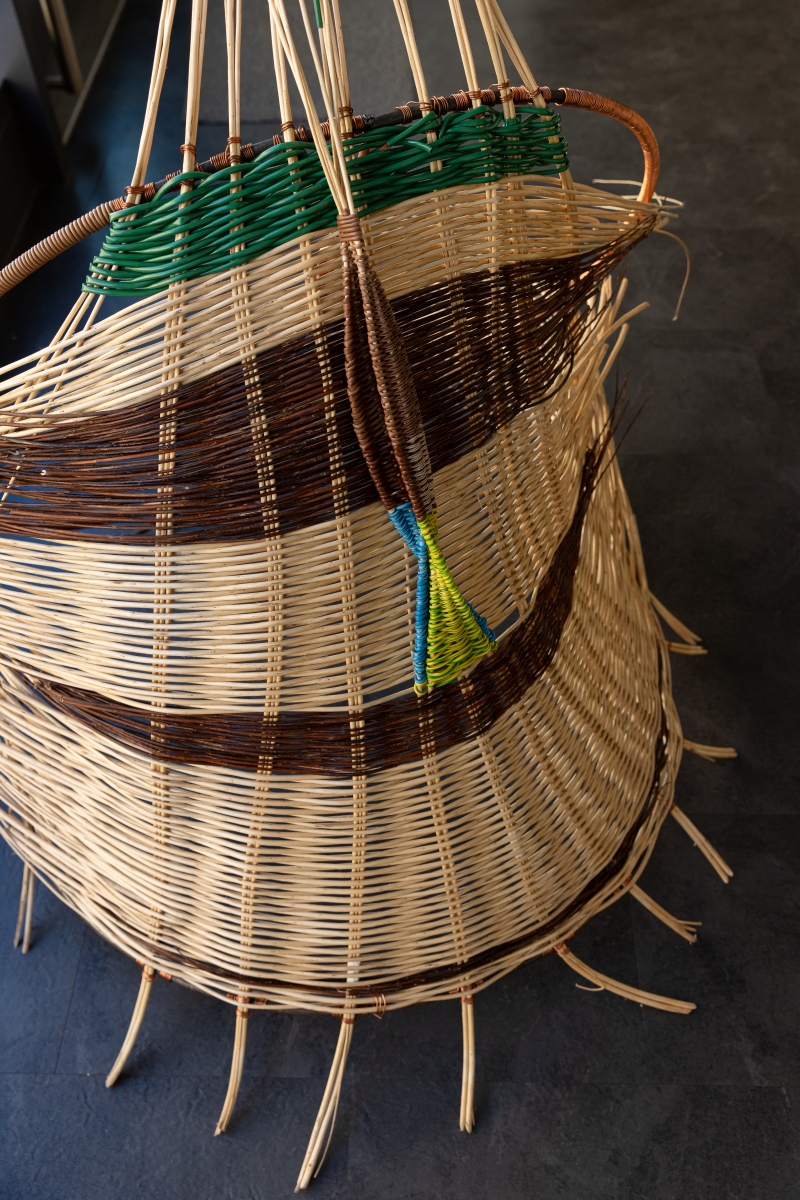
Roland Farkas (NL/SK) is an artist of Roma origin based in The Netherlands, who recently completed his MA in Artistic Research at the Royal Academy of Art in The Hague (KABK). His practice moves between sculpture, performance, and storytelling, exploring how inherited craft knowledge can be transformed into contemporary artistic forms.
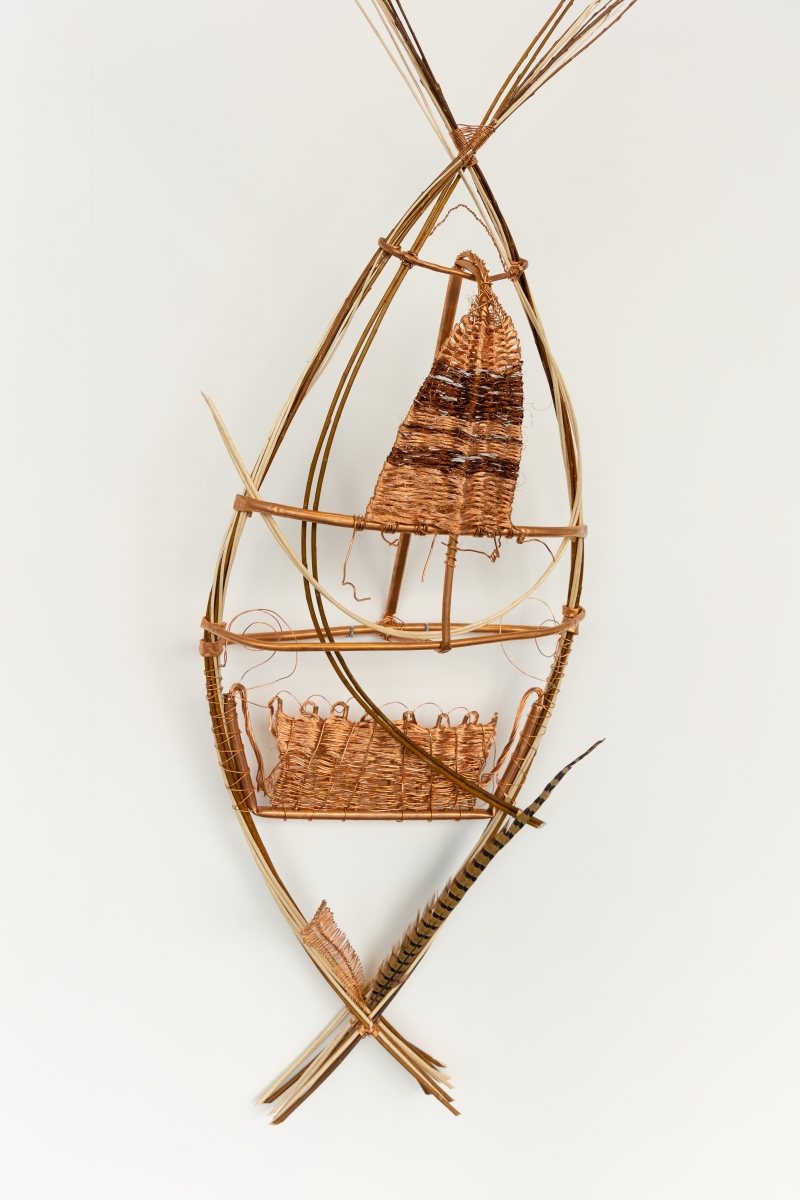
Drawing from family traditions of basket weaving that he learnt while growing up in Slovakia, Farkas works with materials such as willow branches, copper wire, and found objects. He studied at the AKI ArtEZ Academy of Art & Design in Enschede, where he also became fascinated with performance and experimental art form. Through this constant movement of materials, stories, and people, Farkas explores how cultural knowledge survives, adapts, and transforms across time and place. By combining material practice with performative and participatory elements, his work invites audiences to encounter sculpture not only as an object but as an evolving structure of relations between memory, labor, exchange, and collective imagination.
During the deliberations, the jury also reflected on the broader importance of the residency programme and its continuity. Over successive editions, jury members have had the privilege of encountering some artists and their portfolios more than once, witnessing how practices, ideas and artistic languages have developed over time. This continuity underlines the value of a programme that not only selects artists for a particular residency, but also accompanies a wider field of artistic practices as they evolve. The jury therefore strongly encouraged applicants to continue developing their work and to apply again in future editions.
ERIAC would like to extend its particular thanks to Elena Agudio and the entire Villa Romana team for their continued collaboration, trust and commitment to this partnership. Since its beginning in 2020, the residency has grown through this sustained institutional exchange and a shared belief in creating meaningful opportunities for Roma contemporary artists.
We warmly congratulate Roland Farkas on his selection and look forward to following the new encounters, materials and directions that will emerge from his residency at Villa Romana in Florence.
Former Villa Romana Residents, International Guest Artists who participated in the program:
2025 – Romy Rüegger and Monika Kováčová
2024 – Charly Bechaimont and Lila Loisse
2023 – Erik Tollas
2022 – Dariya Kanti and Luna De Rosa
2021 – L’uboš Kotlar and Norbert Oláh
2020 – Robert Gabris and Małgorzata Mirga-Tas
About Villa Romana and ERIAC:
Villa Romana is a place of contemporary artistic production and of international exchange. Founded in 1905 by artists and patrons, it still operates as a non-profit association. Every year it hosts four Villa
Romana award winners (this year: Charmaine Poh, Susanne Sachsee, Mikołaj Sobczak, Gülbin Ünlu), as well as international guest artists. With its programme of workshops, exhibitions, and a wide range of public events, Villa Romana strives to promote interaction between artists and the public, to engage and support different local communities and expand its international network.
The European Roma Institute for Arts and Culture (ERIAC), founded in 2017, is a transnational organization promoting the artistic production, cultural heritage, and creative expression of Roma communities across Europe. ERIAC acts as a hub for Roma-led innovation in the visual and performing arts, literature, film, and cultural theory, and has played a leading role in presenting Roma culture at major international art events (documenta 15, Milan Triennale, Manifesta 14, Autostrada Biennale, Roma Pavilion-collateral events at the Venice Biennale, Barvalo exhibition at MUCEM). It regularly curates exhibitions for visual artists and emerging talents in its gallery space in Berlin. Through these initiatives, ERIAC continues to foster Roma artistic excellence, develop, and amplify Roma voices in contemporary visual arts.