
Roma(ni) Past – Europe’s Future: Why Embracing the EU’s Largest Ethnic Minority Matters
Roma have been an integral part of Europe for over seven centuries, shaping its cultural, social, and economic landscape. Yet, they remain among the continent’s most marginalized and misunderstood communities. Antigypsyism, a deep-rooted, structural form of racism, continues to permeate institutional practices, everyday interactions, and public policy.
Effective policymaking for Roma communities often lacks a comprehensive understanding of Roma history, identity, and lived experiences, as well as the human-rights dimensions of antigypsyism. To address these persistent knowledge gaps, the European Roma Institute for Arts and Culture (ERIAC) is organising the online training course Roma(ni) Past – Europe’s Future: Why Embracing the EU’s Largest Ethnic Minority Matters on 30 October 2026.
The course is designed in an accessible and practice-oriented format. It places Roma identity, history and culture within the debates currently shaping Europe – on migration, minority and human rights, nationalism and populism, and the future of European integration – and shows why these questions matter for public officials today.
Register now: https://forms.gle/uCTSoqG5BGfRiYqJ9
Who is the training for?
- Staff of the European Union institutions and the Council of Europe
- Public officials at national, regional and local level
- Members of the public interested in Roma identity, history and culture
What will participants gain?
By the end of the training, participants will:
- Understand antigypsyism as a specific, structural form of racism, and recognise how it appears in policy-making and public administration;
- Have a human-rights framework, grounded in EU and Council of Europe references, for engaging with Roma-related issues;
- Know more about Roma identity and history, including the Roma Holocaust (Porajmos/Samudaripen) and its long absence from mainstream memory;
- Value Roma culture on its own terms, with a particular focus on music;
- Approach sensitive topics with confidence, respectfully and accurately, in their own professional work;
- Leave with additional resources to continue learning after the course.
Practical information
- Date: Friday, 30 October 2026
- Time: 09:50–17:45 CET
- Format: Online (Zoom)
- Language: English
- Participation: Free of charge, registration required
- Zoom link: sent to registered participants 24 hours before the event
- Materials: participants will receive supplementary resources to explore the topics further
This training is organised in the frame of the ERIACNET4EU project, co-financed by the European Commission through the CERV programme.
Roma(ni) Past – Europe’s Future: Why Embracing the EU’s Largest Ethnic Minority Matters | Programme
09:50–10:00 CET | Opening and technical check-in
10:00–10:15 CET | Welcome address and opening remarks – Dr. Anna Mirga-Kruszelnicka, Executive Director, ERIAC
10:15–11:45 CET | Session 1 – Antigypsyism
“The Architecture of Exclusion: Understanding Antigypsyism as Structural Racism”
Trainer: Dr. Dezső Máté
- Antigypsyism as a specific, structural form of racism directed at Roma: definitions, historical roots and contemporary manifestations
- How antigypsyism shows up in policy-making and public administration
- EU and Council of Europe human-rights references and frameworks for addressing antigypsyism
11:45–11:55 CET | Coffee break
11:55–13:25 CET | Session 2 – Roma Identity
“Divided by History, United by Future: Roma Identity and the Politics of Nation-Building”
Trainer: Prof. Raul Cârstocea
- Self-identification and the diversity of Roma communities and groups across Europe – shaped by history, yet united by a shared sense of belonging as one people
- Roma identity against the backdrop of European nation-building and nationalism
- What this means in participants’ own institutional and professional context
13:25–14:25 CET | Lunch break
14:25–15:55 CET | Session 3 – Roma History, including the Roma Holocaust
“The Unwritten Chapter: Roma History and the Weight of Memory”
Trainer: Prof. Raul Cârstocea
- An overview of Roma history in Europe, with the Roma Holocaust (Porajmos/Samudaripen) as a central and defining chapter
- Its facts, its long suppression from mainstream memory, and its relevance to antigypsyism and human-rights work today
15:55–16:05 CET | Coffee break
16:05–17:35 CET | Session 4 – Roma Culture
“Many Styles, One Thread: Roma History and Culture Through Music”
Trainer: Dr. Petra Gelbart
- Roma musical traditions across Europe – from flamenco to Balkan brass to jazz manouche – as a lens on Roma history and culture
- The diversity of Roma musical styles and the common thread running through them
- Applying a rights-based, culturally informed appreciation of Roma culture in professional work
17:35–17:45 CET | Closing remarks – Claudiu Pamfil, ERIAC
Meet the trainers
Dr. Dezső Máté
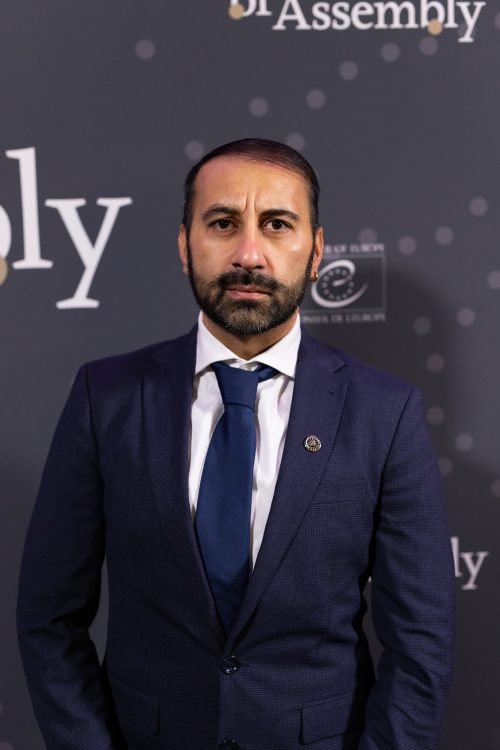
Dr. Dezső Máté is a sociologist with a PhD from Eötvös Loránd University, Hungary. He is a Senior Research Fellow in the History Department of the Leibniz Institute for East and Southeast European Studies (IOS) in Regensburg, within the European Research Council (ERC)-funded EMPOWER project. He is also a Research Associate at the Interdisciplinary Centre for European Studies, Europa-Universität Flensburg, a Visiting Research Fellow at the Research Centre on Antigypsyism, Heidelberg University, and Deputy Chair of the Barvalipe Academy at ERIAC. He is an alumnus of the Kulturwissenschaftliches Institut (KWI) in Essen.
Dr. Máté has been a visiting lecturer at Södertörn University’s Critical Romani Studies Department in Stockholm, and a Research Fellow and Course Leader at the Romani Studies Program of the Central European University in Budapest. He was a Visiting Research Associate at the University of Sussex’s Centre for Higher Education and Equity Research (2015–2017) and a Junior Research Fellow at the Hungarian Academy of Sciences’ Institute for Minority Studies (2013–2018). His research covers intersectional and academic antigypsyism, structural racism, social movements and resilience. His monograph examines academic antigypsyism through a social-psychological analysis of resilience.
Dr. Petra Gelbart

Dr. Petra Gelbart is a Romani educator, scholar and musician. Growing up in Czechoslovakia, she was introduced to Romani music and language by her family. She earned her PhD in musicology/ethnomusicology at Harvard University and co-founded the Initiative for Romani Music at New York University. Her research interests include interethnic communication, the psychology of music, the Holocaust and institutional ethnography. At university level, she has taught the theory, practice and cultural context of Romani music, among other subjects.
Dr. Gelbart is also a board-certified music therapist specialising in rehabilitative and developmental therapy. Alongside her practice in New York City, she works with Czech foster and adoptive families raising Romani children.
Prof. Raul Cârstocea
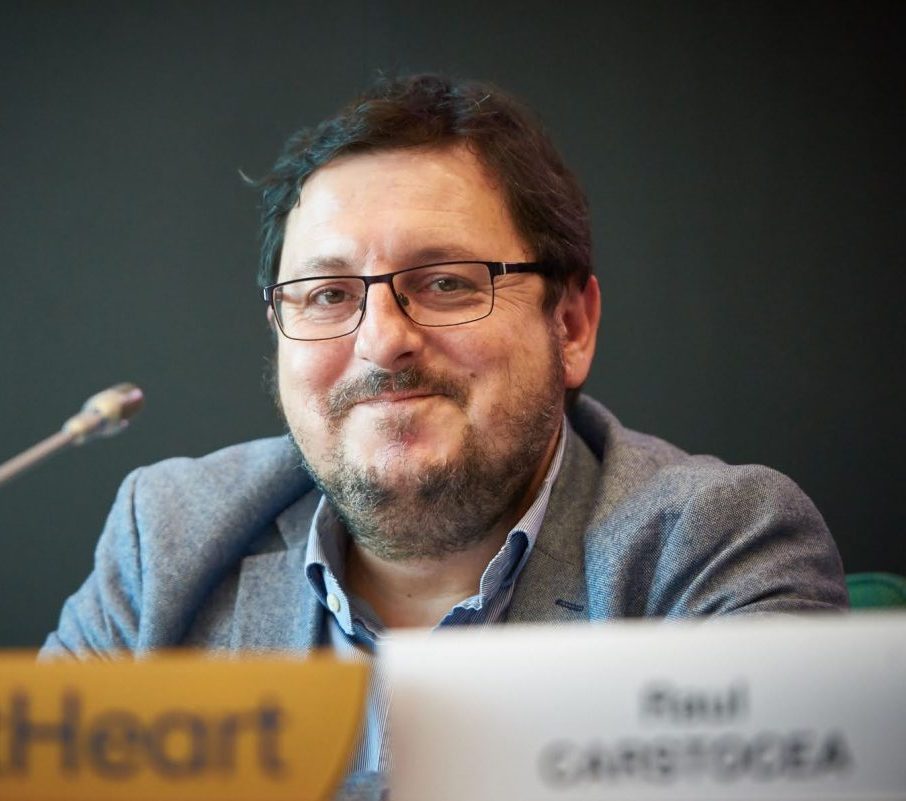
Raul Cârstocea is Professor of History at Maynooth University and Principal Investigator of the ERC Consolidator Grant project “Insurgent Temporalities: Fascism as a Global Anti-Universalist Project” (2025–2030). His research focuses on antisemitism, fascism, nationalism and the Holocaust, and more broadly on state formation and nation-building in 19th- and 20th-century Europe and their consequences for minority groups.
He co-edits the Modern History of Politics and Violence book series at Bloomsbury, sits on the editorial boards of Fascism: Journal of Comparative Fascist Studies and S:I.M.O.N. (Shoah: Interventions. Methods. Documentation), and is a member of ERIAC’s Barvalipe Academy.