
Romani Gili Contest 2026 Jury
The European Roma Institute for Arts and Culture (ERIAC) is pleased to introduce the jury of the 2026 Romani Gili Contest, a distinguished group of artists, scholars, and cultural leaders whose work reflects the diversity, creativity, and contemporary evolution of Roma musical heritage.
The Romani Gili Contest is a social media–based cultural initiative dedicated to celebrating, preserving, and reimagining Roma music. In Romani, “gili” means song — a powerful form of expression that carries memory, identity, and emotion across generations. The contest invites artists and communities to reinterpret Roma songs in contemporary forms, contributing to a growing digital archive of Roma musical expression and creativity.
This year’s final results will be determined through a balanced evaluation process, combining both expert assessment and public participation. The public is invited to support their favourite finalist by reviewing all 20 submissions and casting their vote via the official voting form. The public voting phase is now officially open and will remain active until 18 June at 10:00 AM CET.

Romani Gili Contest 2026 Jury
The Romani Gili Contest jury includes influential voices from music, performance, academia, and cultural leadership, each contributing a unique perspective on Roma culture and its global artistic presence.
Diego Amador
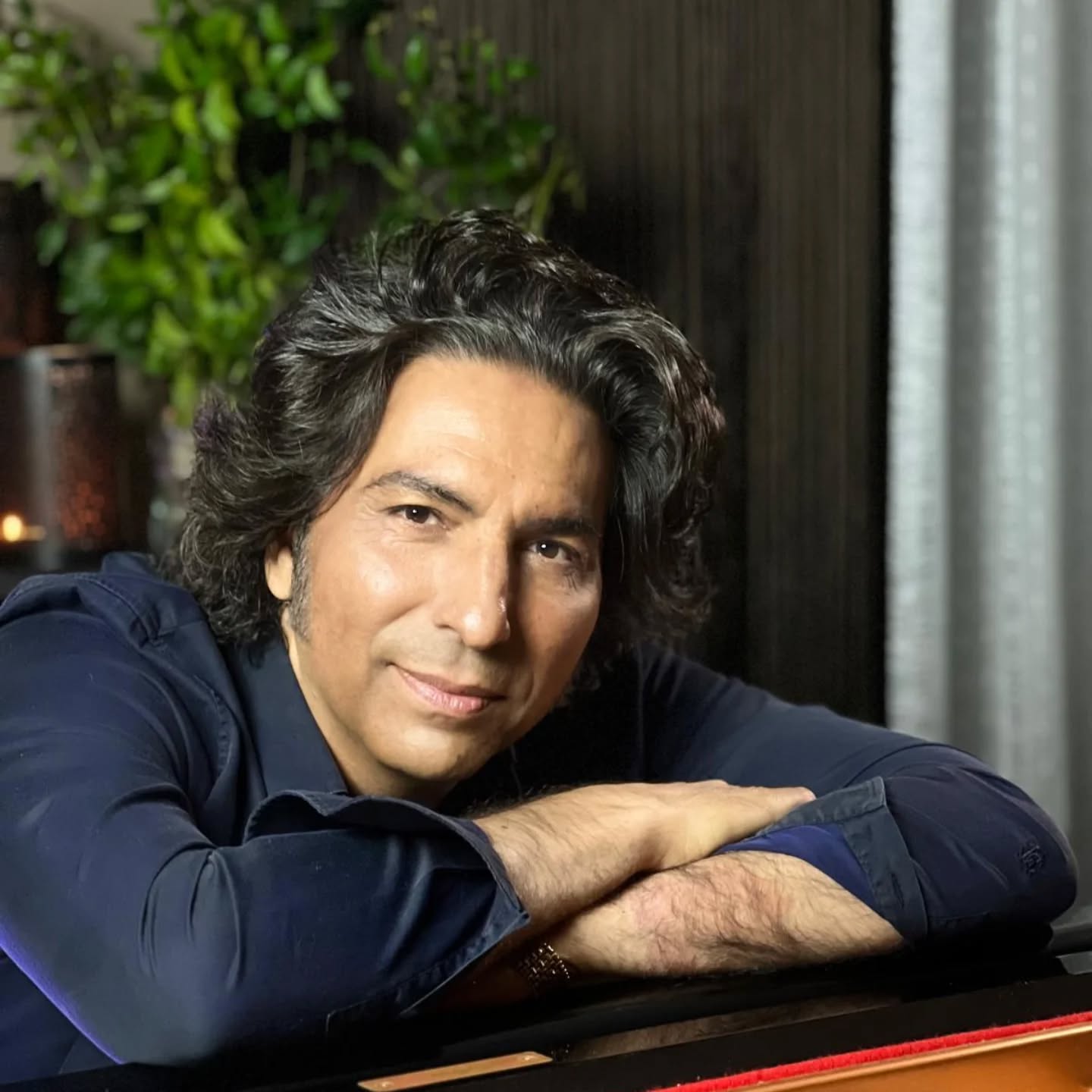
Diego Amador is an internationally recognised Roma musician and composer from Spain, whose work fuses traditional Romani and flamenco roots with jazz, classical, and global music influences.He is a singer, pianist, and composer who has developed a highly personal and recognisable musical language that moves fluidly across genres while remaining deeply rooted in flamenco tradition.
Born into a historic Roma flamenco family, his artistic practice embodies the transmission of intangible Roma cultural heritage through innovation, excellence and lived experience. Throughout his career, he has performed on major international stages and collaborated with leading artists and cultural institutions across Europe and beyond. His work contributes to the recognition of Roma music as a living, evolving cultural expression, challenging folklorisation and stereotypical representations. Recognized with awards such as the Giraldillo from the Bienal de Flamenco de Sevilla and nominated for a Latin Grammy for Río de los Canasteros, Diego Amador has established himself as a timeless creator.
Riah Knight

Riah Knight is a British-Romani artist based in Berlin whose interdisciplinary practice spans acting, music, writing, and dramaturgy. Her work is rooted in feminism and social justice, using theatre to challenge dominant systems of knowledge and re-centre the female gaze.
As a musician, she blends R&B, folk, trip-hop, and performance poetry, with evocative lyrics and a laid-back, sultry vocal style. She has performed across Europe at major festivals and cultural institutions, and several of her plays have received award nominations. Her EP Wicked Laughter explores the darker aspects of femininity, creating a sonic space for rethinking female aggression and desire.
Zejna Murkić

Zejna Murkić is a singer from Loznica, Serbia, who has been active professionally since 2009. She began her career as part of a music group before establishing herself as a solo artist. Her work is recognized for its distinctive style, as well as her public emphasis on her Romani heritage, which also informs her engagement with social issues.
Her music spans a range of projects, including contributions to the film Toma, performances in Disney concert productions, and participation in Serbia’s national selection for the Eurovision Song Contest (Pesma za Evroviziju). Alongside her artistic work, she has been involved in initiatives focused on inclusion and empowerment, including collaborations with Romani children in vulnerable communities.
In addition to her music career, Murkić is associated with humanitarian and advocacy efforts addressing human rights, equality, and women’s rights, including work connected to organizations such as the UNHCR. She has also collaborated with and served as an ambassador for the European Roma Institute for Arts and Culture (ERIAC), further integrating her artistic practice with cultural and social advocacy.
Santino Spinelli

Santino Spinelli is an internationally recognized Italian Romani musician, composer, poet, essayist, and professor from Abruzzo. He holds degrees in Modern Foreign Languages and Literature and in Musicology from the University of Bologna, and he teaches Romani language and intercultural processes at the University of Chieti (where he has been professor since 2008). He is the founder and president of the cultural association Thèm Romano (Romani World) and the Alexian Group, through which he has built a long international career as a performer, composer, and accordion virtuoso. With ensembles of various formations, he has performed extensively in Italy and abroad for over 45 years.
Spinelli has also played an important role in international Romani advocacy. In 2001, he was elected Italy’s representative to the International Romani Union (IRU), and later became its Ambassador of Romani Culture and Art (2003) and Vice President (2007).
Anna Mirga-Kruszelnicka

Dr. Anna Mirga-Kruszelnicka is a Polish-Roma anthropologist, scholar, and activist known for her work on Roma rights, ethnic mobilization, and cultural representation. She earned her Ph.D. in Social and Cultural Anthropology from the Universitat Autònoma de Barcelona (UAB) in 2016 and also holds master’s degrees in European Integration (UAB, Spain) and Comparative Studies of Civilizations (Jagiellonian University, Poland).
Mirga-Kruszelnicka has conducted extensive research with Roma communities across Europe and Latin America, focusing on ethnopolitics, identity construction, the Roma Holocaust and Roma resistance, remembrance culture, antigypsyism, and the participation of Roma youth and women in social movements. As one of the leading voices in Critical Romani Studies, she has authored and edited numerous scholarly publications and co-edited books, including “Education for Remembrance of the Roma Genocide: Scholarship, Commemoration and the Role of Youth” (2015) and “Re-thinking Roma Resistance throughout History” (2020). In 2022, she published “Mobilizing Romani Ethnicity: Romani Political Activism in Argentina, Colombia, and Spain”.
Alongside her academic work, she has been deeply involved in Roma civil society. With over two decades of professional experience and sustained engagement with Roma issues, she brings extensive expertise at the intersection of civil society, academic research, cultural diplomacy, and advocacy.
She has served as Deputy Director of the European Roma Institute for Arts and Culture (ERIAC) since January 2018. Since January 2026, she serves as Executive Director of ERIAC.