JEKHIPE Masterclass with Fernando Ruiz Molina
The European Roma Institute for Arts and Culture (ERIAC) is releasing the masterclass Anti-Gypsyism, Resistance, and Cultural Memory: A Critical Perspective from Spain, with Fernando Ruiz Molina, produced in the framework of the project Reclaiming Our Past, Rebuilding Our Future: New Approaches to Fighting Antigypsyism (JEKHIPE).
For centuries, the Romani people in Spain have navigated a landscape of institutionalized exclusion. This masterclass uncovers the hidden threads of this history: the laws that criminalized an identity, the repression of the Franco era, and the quiet persistence of inequality today.
However, the story of the Roma is not just one of victimhood, it is one of fierce political and cultural resistance. Fernando Ruiz Molina explores the transformative power of the post-1978 associative movement and the revolutionary leadership of Roma women.
About the author
Fernando Ruiz Molina is a Ph.D. Candidate in Criminology at the University of Plymouth, funded by a Marie Sklodowska-Curie fellowship. A human rights lawyer by training, he has over 14 years of experience in Roma activism at local, national, and international levels. He worked at OSCE/ODIHR on Roma and Sinti issues and currently presides over CHANIPEN: Research, Memory and Justice, a Roma organization in Spain. His work focuses on hate perpetration against Roma and developing theoretical frameworks for anti-Roma racism.
This masterclass is based on a research study produced by Fernando Ruiz Molina and developed within the JEKHIPE project. Six research fellows from Germany, Spain, Italy, Romania, Czechia, and Sweden were selected to produce in-depth papers documenting historical and contemporary forms of antigypsyism, Roma civil rights movements, and cultural history in their national contexts.
These papers are designed to generate new historical evidence, enrich academic and policy debate, and inform public-facing outputs. Each study is published in both the national language and English to ensure accessibility at local and European levels. Together, they form the foundation for a series of masterclasses that translate the research into accessible audiovisual formats for wider audiences.
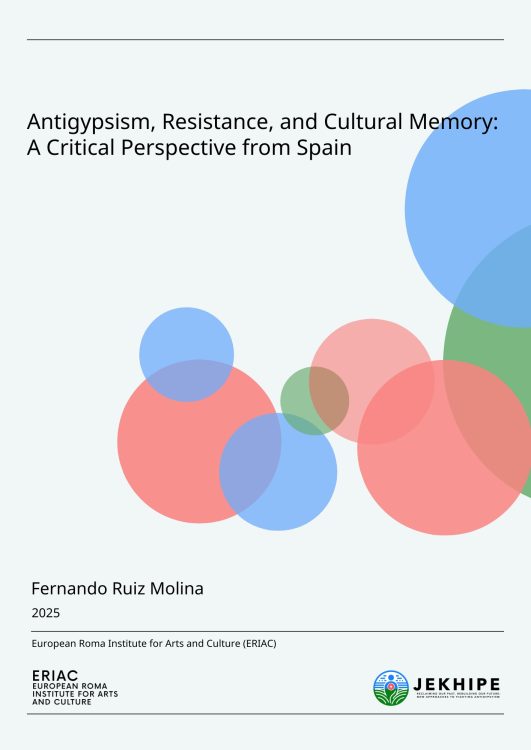
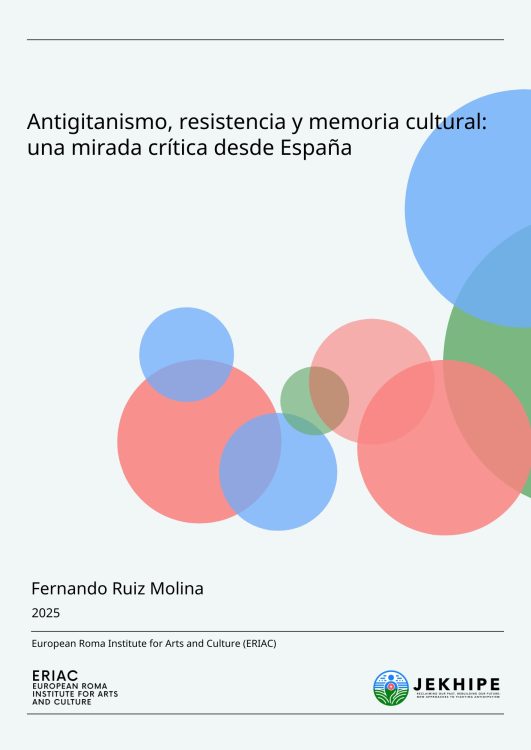
Read the Research Paper “Anti-Gypsyism, Resistance, and Cultural Memory: A Critical Perspective from Spain”Authored by Fernando Ruiz Molina
Disclaimer: Funded by the European Union. Views and opinions expressed are however those of the author(s) only and do not necessarily reflect those of the European Union or the European Commission. Neither the European Union nor the granting authority can be held responsible for them
About JEKHIPE
JEKHIPE is a European Commission-funded initiative (CERV) led by ERGO Network, ERIAC, and CEPS, in collaboration with national partners: Slovo 21 (Czechia), Central Council for German Sinti and Roma (Germany), UCRI and Romni (Italy), Amare Romentza (Romania), FAGiC and Romane Siklovne (Spain), and Trajosko Drom (Sweden). Together, these organizations address historical injustices, such as the lack of recognition for the Roma Holocaust and slavery, while promoting institutional representation in arts and education. By engaging policy-makers and grassroots communities, JEKHIPE seeks to contribute to the establishing of clear mechanisms for governmental accountability across Europe.
Together, these organizations address historical injustices, such as the lack of recognition for the Roma Holocaust and slavery, while promoting institutional representation in arts and education. By engaging policy-makers and grassroots communities, JEKHIPE seeks to contribute to the establishing of clear mechanisms for governmental accountability across Europe.
The project aims to achieve the following objectives:
- Establish expert and/or truth commissions on antigypsyism.
- Develop policy recommendations for EU and national policymakers on transitional justice approaches to address antigypsyism.
- Raise awareness of institutional antigypsyism and policy and legislative developments in the fight against antigypsyism.
- Promote Roma identity, history, and culture to prevent and fight antigypsyism, including incorporating Roma history and culture into school curricula.
- Empower Roma communities and NGOs to recognize and fight antigypsyism.
- Capacitate local Roma civil society and key stakeholders in countering antigypsyism.
Detailed records of project outputs, including research data and scholarly publications, are publicly accessible via the project’s dedicated website: antigypsyism.eu