
ERIAC Welcomes the 2026 Thematic Section Coordinators
The European Roma Institute for Arts and Culture (ERIAC) is pleased to announce the selection of the Thematic Section Coordinators for the year 2026. Following an internal call open to ERIAC members, five professionals have been selected to take on this important role, each representing one of ERIAC’s core thematic sections:
-
Arts and Culture – Miguel Ángel Vargas
-
Media and Information – Dalibor Tanić
-
Research and Publication – Maria Bogdan, Ph.D.
-
History and Commemoration – Gopalas Michailovskis
-
Romani Language – Mihaela Zătreanu
The Thematic Section Coordinators play a vital role in supporting the work of ERIAC and strengthening engagement within the membership community. They foster dialogue and cooperation among members, encourage active participation within their respective thematic fields, and contribute to the implementation of ERIAC’s mission and strategic priorities.
Acting as a bridge between ERIAC’s management, the membership community, and the ERIAC Barvalipe Academy, the Coordinators facilitate meetings, gather feedback, and support collaborative initiatives that advance ERIAC’s work across Europe.
ERIAC congratulates the selected Coordinators and looks forward to their contributions in 2026.
ERIAC Section Coordinators 2026
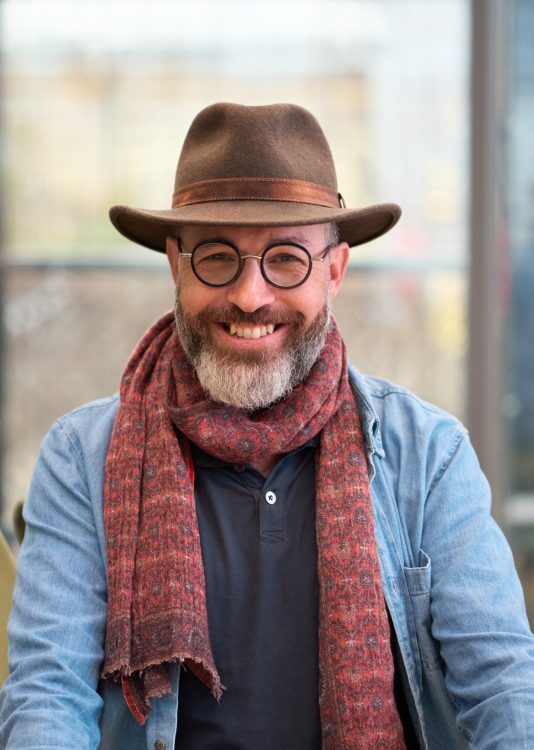
Arts and Culture
Miguel Ángel Vargas (Lebrija, 1978) is an independent researcher, art historian, and theatre director working at the intersection of Romani history, flamenco, and artistic research. His work explores racialisation, urban space, and Romani contemporary creation through performance, mediation, and critical historiography. He has collaborated with international academic and cultural institutions, including Harvard FXB, and is a member of ERIAC’s Barvalipe Academy.
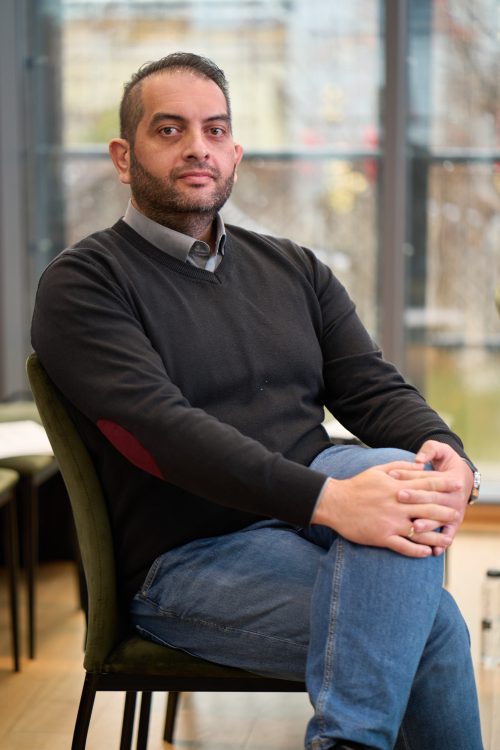
Media and Information
Dalibor Tanić is a journalist and activist with 20 years of experience in media, political analysis, and social engagement; founder and editor in-chief of Bosnia’s first independent Roma media platform; winner of the European Union Prize for Investigative Journalism in Bosnia and Herzegovina for 2014; member of the NARON network, which brings together journalists from the Roma community; participant of the ROMANI-TRANSLATION SUMMER INSTITUTE at Concordia University in Montreal; winner of the “Ronald Lee Translator Award” for Romani Journalism and Translation, awarded at Concordia University, Montreal. Skilled in content production, strategic communication, and project management. Certified NLP Trainer focused on leadership development and communication excellence.
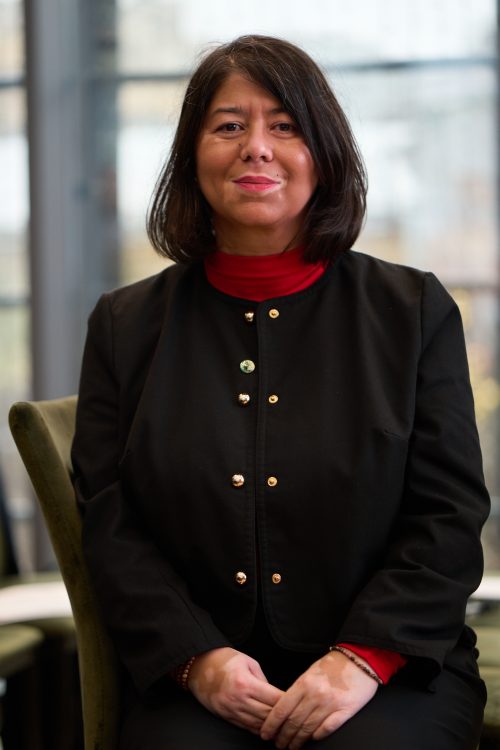
Research and Publication
Dr. Maria Bogdan is a media and cultural theorist. Her research examines contemporary and historical injustices and racism through representation (media, film, and archival), cultural memory, and cultural trauma. Her recent work foregrounds oral history and the Roma Holocaust, and also engages with commemoration practices and cultural remembrance.
She earned her Ph.D. in Film, Media, and Culture Theory from Eötvös Loránd University in Budapest (2018). Her academic career includes a Fortunoff research fellowship at the Vienna Wiesenthal Institute for Holocaust Studies (2023–2025) and the first Romani Rose fellowship at the Antigypsyism Research Center, Heidelberg University (2019–2020). A Fulbright alumna, she conducted part of her doctoral research at Columbia University.
She is a founding member and managing editor of Critical RomaniStudies. Her academic work is complemented by her background in journalism and film. She served as the first Chair of ERIAC’s Barvalipe Academy and held this position for six years (2019–2024). In 2026, she serves as the ERIAC Section Coordinator for the Research and Publication Section.
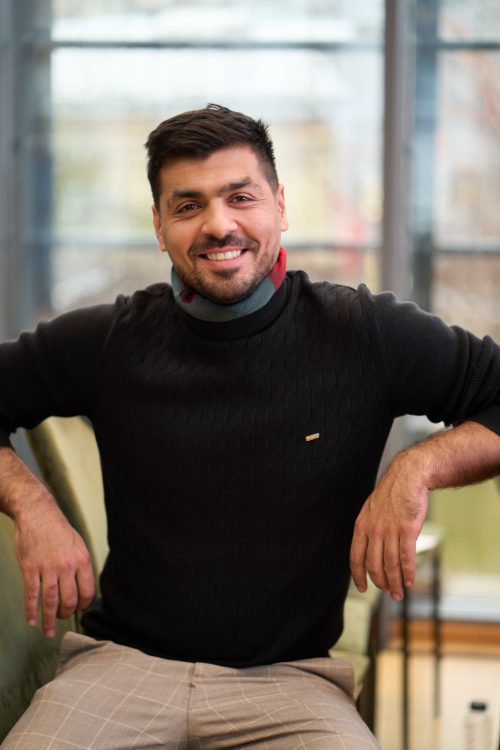
History and Commemoration
Gopalas Michailovskis is both an artist and researcher. As an artist, he graduated from the Lithuanian Music and Theatre Academy, obtaining an MA degree as an opera singer (baritone). Besides the career of operatic singing, Gopalas also organizes concerts and workshops dedicated to Roma musical folklore that is performed in jazz, funk, or operatic musical styles. Later, Gopalas continued his studies at Central European University, firstly in the Roma Graduate Preparation Program and later in the MA Cultural Heritage Studies Program, which was complemented by my attendance of the Advanced Certificate in Romani Studies. Not only have the latter studies enormously contributed to his personal growth, but it almost entirely changed his attitude towards the cultural epistemology of the Westernized world.
Romani Language
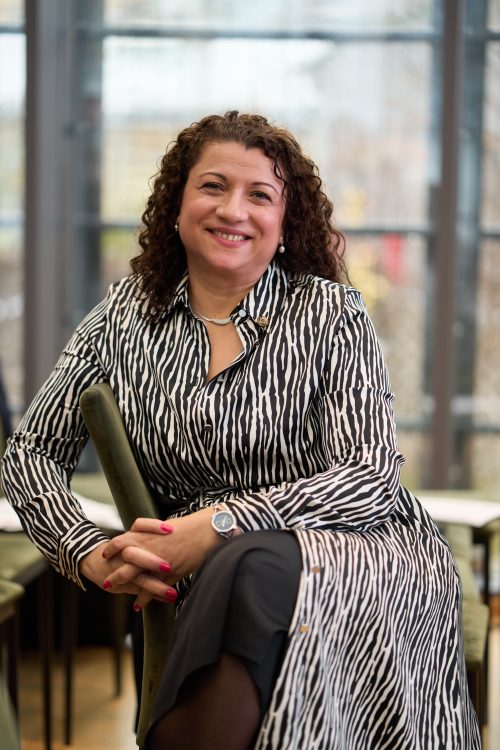
Mihaela Zătreanu is a Romani language expert and educator with over 25 years of experience in Roma education, language development, and inclusive education policy at national and European levels. She is currently a PhD candidate at the Romanian Academy (SCOSAAR), researching the development of a common Romani language as a European public policy tool for cultural rights, educational equity, and social inclusion.
She holds degrees in English–Romani and International Relations and is a certified primary school teacher. Mihaela has worked as a teacher, School Inspector at the Romanian Ministry of Education, and Council of Europe expert, contributing to major policies and frameworks on Romani language education, Roma inclusion, and school mediation.
Since 2018, she has led ERIAC’s Romani Language Initiative, focusing on dialect harmonization and the expansion of Romani in education and public life. She is the author and co-author of ERIAC’s Romani language textbooks (A1–B1) and is currently developing the B2 level.